At Lauriston Primary School, we believe that mathematics is an essential life skill and that every child can become a confident, capable and successful mathematician. We aim to develop pupils who enjoy mathematics, approach challenges with resilience and can apply their mathematical knowledge and understanding confidently in a range of contexts.
Our mathematics curriculum is ambitious, inclusive and carefully sequenced to ensure that all children develop secure mathematical foundations. We place great importance on developing fluency, mathematical reasoning and problem-solving, enabling pupils to make connections, recognise patterns, explain their thinking and apply their knowledge to increasingly complex problems.
We want our children to leave Lauriston as confident and independent mathematicians, equipped with the knowledge, skills and resilience they need for the next stage of their education and everyday life. Essentially, we want children to love Maths.
Intent
Our mathematics curriculum is designed to develop a deep and secure understanding of mathematical concepts, ensuring that knowledge and skills build progressively from the Early Years Foundation Stage (EYFS) through to the end of Key Stage 2.

Ian Lovett
Maths Lead
The curriculum follows the statutory requirements of the National Curriculum for Mathematics and is designed to ensure that pupils develop knowledge and understanding across the key areas of mathematics, including number, calculation, fractions, measurement, geometry and statistics.
We aim to ensure that all pupils:
-
Develop fluency in essential mathematical facts, concepts and procedures.
-
Become confident in using a range of calculation strategies and mathematical methods.
-
Develop their ability to reason mathematically, explain their thinking and justify their answers.
-
Apply their mathematical knowledge to solve problems in a variety of contexts.
-
Recognise connections between different areas of mathematics.
-
Develop resilience, independence and a positive attitude towards mathematical challenges.
We have high expectations for every pupil and are committed to ensuring that all children, regardless of their starting points or individual needs, have access to an ambitious and engaging mathematics curriculum.
Implementation
Our mathematics curriculum is carefully planned and sequenced to ensure that pupils build on prior learning and develop increasingly secure mathematical knowledge and understanding. We use White Rose Maths to support our curriculum planning and delivery, ensuring that learning is broken down into manageable steps and that key concepts are revisited and developed over time.
Teaching for Mastery
We adopt a mastery approach to the teaching of mathematics, with the aim of ensuring that pupils develop a deep understanding of mathematical concepts rather than simply learning procedures or memorising methods.
Lessons are carefully structured to introduce new learning, build on prior knowledge and provide opportunities for pupils to practise, explore and apply their understanding. Teachers use modelling, questioning, discussion and varied examples to address misconceptions and deepen pupils' mathematical thinking.
We encourage pupils to explain their reasoning, make connections and develop confidence in selecting appropriate strategies when approaching mathematical challenges.
Concrete, Pictorial and Abstract (CPA)
A key feature of our mathematics teaching is the use of the Concrete, Pictorial and Abstract (CPA) approach. This enables pupils to develop a secure understanding of mathematical concepts through practical experiences, visual representations and increasingly formal mathematical methods.
-
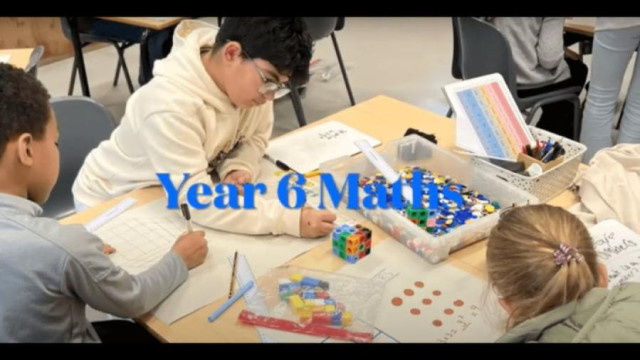
Concrete: Pupils use practical resources and manipulatives, such as counters, cubes, place-value equipment and other mathematical apparatus, to explore and understand concepts.
-
Pictorial: Pupils represent their mathematical thinking through drawings, diagrams, number lines, bar models and other visual representations.
-
Abstract: Pupils develop confidence in using mathematical symbols, notation and formal written methods to solve calculations and problems.
These approaches support pupils in making connections between practical experiences, visual representations and abstract mathematical ideas.
Fluency, Reasoning and Problem-Solving
Fluency, reasoning and problem-solving are integral to our mathematics curriculum and are developed throughout every year group.
Fluency enables pupils to recall key mathematical facts accurately and efficiently, including number bonds, times tables and calculation strategies. Regular arithmetic practice provides opportunities for pupils to consolidate their knowledge and develop confidence and accuracy.
Reasoning encourages pupils to explain their mathematical thinking, identify patterns, make connections and justify their answers using appropriate mathematical vocabulary.
Problem-solving enables pupils to apply their mathematical knowledge and skills to a range of situations, including unfamiliar and increasingly challenging problems. Pupils are encouraged to select appropriate strategies, persevere and evaluate their solutions.
Inclusion and Challenge 
We believe that every child can succeed in mathematics and are committed to ensuring that all pupils can access the full curriculum.
Teachers adapt their teaching to meet the needs of individual pupils through careful modelling, scaffolding, questioning, practical resources and additional opportunities for guided practice where appropriate.
Pupils who need further support are helped to secure essential knowledge and address misconceptions, while pupils who demonstrate secure understanding are encouraged to deepen their learning through reasoning, problem-solving and more challenging mathematical tasks.
Our aim is for all pupils to develop confidence, independence and a positive attitude towards mathematics.
Mathematics in EYFS
In the Early Years Foundation Stage, children develop their mathematical understanding through a combination of adult-led teaching and carefully planned opportunities for exploration, play and practical learning.
Children develop early number sense, counting skills, recognition of patterns, comparison and an understanding of shape, space and measure. They are encouraged to use mathematical language, explore relationships between numbers and apply their developing knowledge in everyday situations.
These early experiences establish the foundations for the more formal mathematical learning that takes place throughout Key Stage 1 and Key Stage 2.
Impact 
The impact of our mathematics curriculum is reflected in the knowledge, confidence and mathematical understanding that pupils develop over time.
We want children to become fluent, independent and resilient mathematicians who can confidently apply their knowledge, reason logically and solve a range of mathematical problems.
Assessment is an integral part of our teaching and learning. Teachers continually assess pupils' understanding through questioning, observation, discussion and the evaluation of their work. This enables teachers to identify misconceptions, address gaps in knowledge and adapt teaching to meet pupils' needs.
Regular arithmetic practice and end of unit assessments, alongside termly summative assessments, help teachers monitor pupils' attainment and progress against curriculum expectations. Assessment information is used to identify areas requiring further teaching, inform planning and ensure that pupils receive appropriate support and challenge.
Pupils are encouraged to reflect on their learning, explain their mathematical thinking and develop increasing independence when approaching new challenges.
By the end of Year 6, we aim for pupils to have developed secure mathematical foundations, a strong understanding of key concepts and the confidence to apply their knowledge successfully as they move on to secondary education.
Supporting Mathematics at Home
Parents and carers play an important role in supporting children's mathematical development. Regular opportunities to practise mathematical skills at home can help children develop confidence and fluency.
We encourage families to explore mathematics in everyday situations, such as telling the time, handling money, measuring, cooking, recognising patterns and practising number facts.
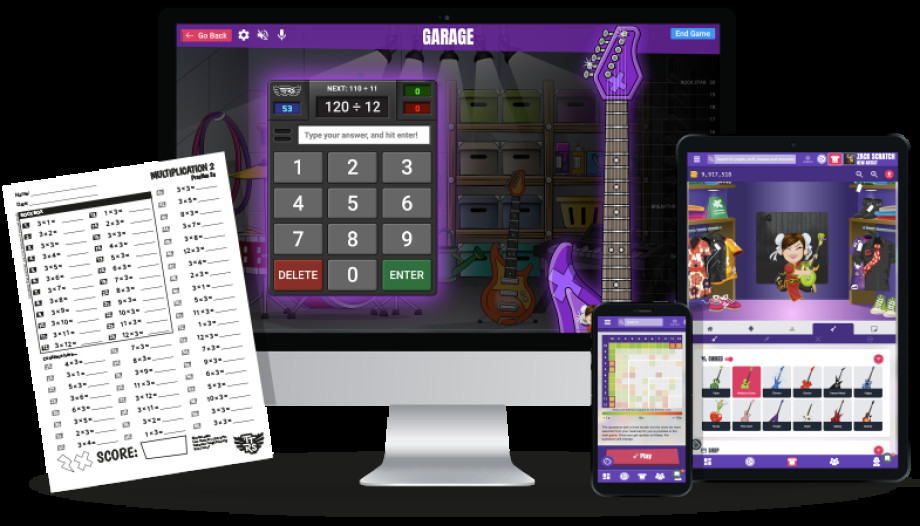
Children also have access to Times Table Rock Stars, which supports the development of multiplication and division fact fluency through regular practice.
Pupil Voice
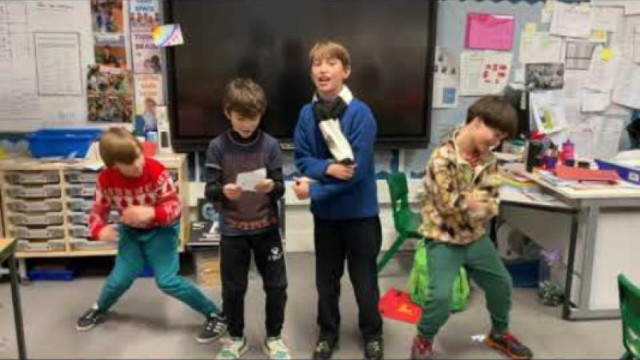
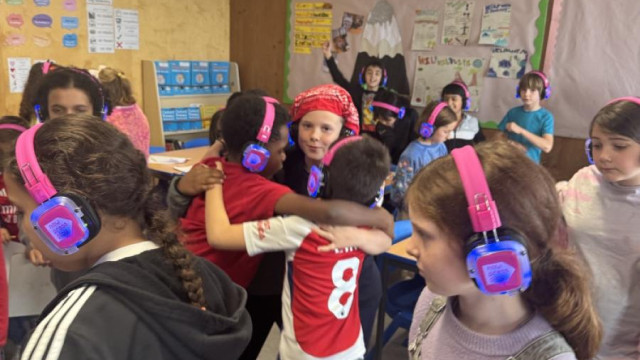
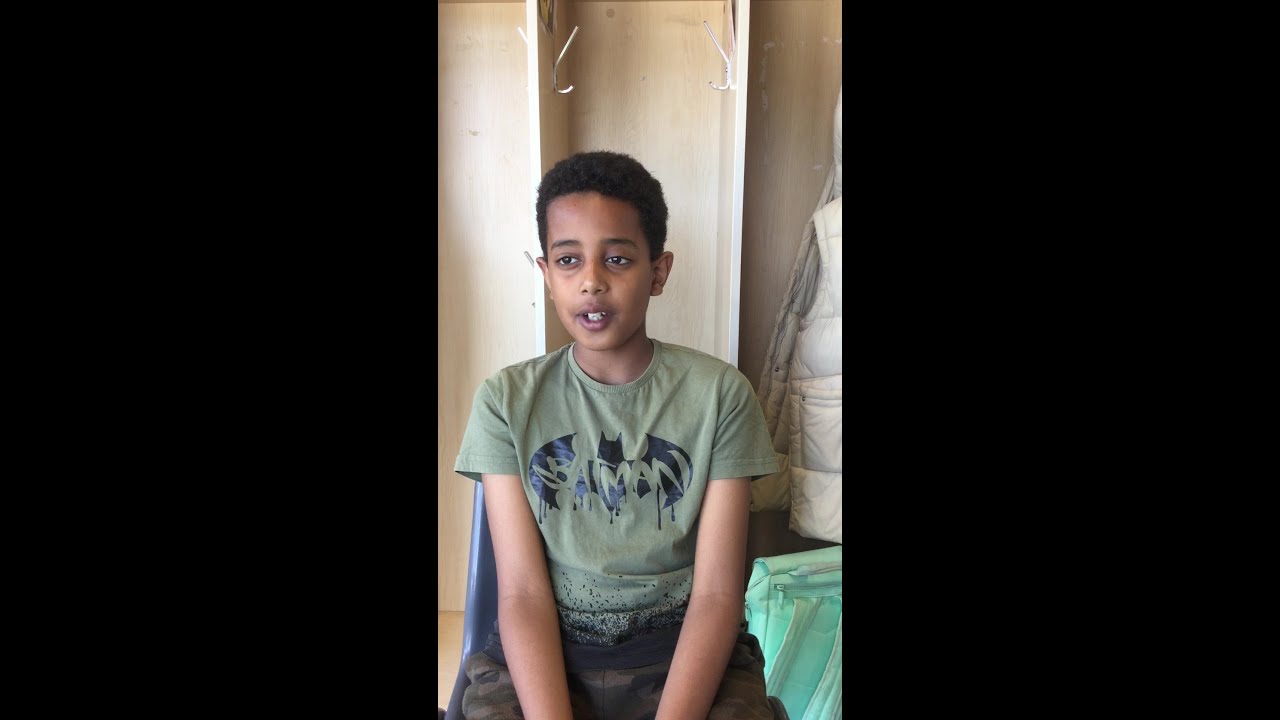
Here's what our children think about maths at Lauriston.

Fluency
Times Table Rock Stars
 Ready, set, go! We have now signed up for Times Table Rock Stars. It is a fun and interactive Times Tables learning tool. Times Tables Rock Stars is a carefully sequenced programme of daily times tables practice at rapid recall. This is especially important as there is a DfE issued Times Table assessment in Year 4 in 2020. Learning the Times Tables will also allow the children to pass the Head Teacher Times Tables Award (HTTA) where they will go home with a prize, certificate and become a Times Tables Tutor. Your children should have all received login details. It’s time to start rocking the times tables!
Policies

We also encourage families to explore the following resources: